Table Of Content
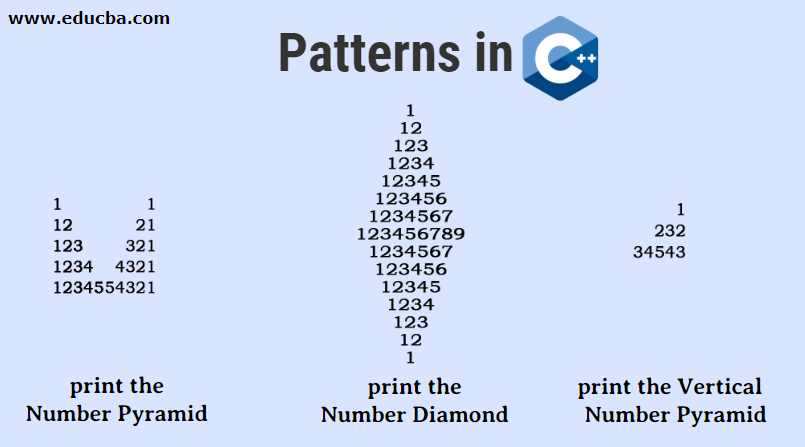
Structural object-patterns define ways to compose objects to obtain new functionality. Design patterns can speed up the development process by providing tested, proven development paradigms. Effective software design requires considering issues that may not become visible until later in the implementation.
Types of Structural Patterns
Structural class patterns use inheritance to compose interfaces or implementations. The Singleton method or Singleton Design pattern is one of the simplest design patterns. It ensures a class only has one instance, and provides a global point of access to it. It is very easy to understand and implement design patterns in Real-Time Applications. Writing the code with design patterns will make your applications more Reliable, Scalable, and Maintainable. In this beginner section, you’ll learn about the most common creational design patterns and how to apply them in your daily work.
Reusable Code:
That means if the object creations and initialization logic are not centralized, it leads to a complicated client code. Structural code uses type names as defined in the pattern definition and UML diagrams. Real-world code provides real-world programming situations where you may use these patterns.
C++ Design Patterns: Behavioral
Suppose you build a game that has a Cat class that implements a Diet class. But let’s say your cat gained too much weight and now it needs to go on a diet that will help it lose weight for its health. There is a good, free, online book, titled Object-Oriented Programming With ANSI-C, which covers the topic of writing object-oriented code in C.
Implementing Factory Pattern

So, these patterns concern how classes and objects can be composed to form larger structures. They help ensure that when one part of a system changes, the entire structure of the system doesn’t need to change. Then, the client can consume the object by calling the necessary methods and properties. The client does not know how the object is created and initialized.
You can create a new class which will start the flow by calling CircleInitializer. Normally in this use case, you would simply write an AirConditioner class with turnOn() and turnOff() methods, but this time we’ll implement the actions in classes instead of methods. Since slices is a required field, Builder’s private constructor is hidden and has a simple factory method that only permits to initialize with slices. If one day you want to add a new crust/ingredient or update the prices of current ones, you won’t need to touch the client code. Template Method is a Behavioral Design Pattern, it defines the skeleton of an algorithm in a method but lets subclasses alter some steps of that algorithm without changing its structure. This is an abstract class that also implements the Component interface and has a reference to a Component object.
The 11 Best Embedded Systems Books in 2024 (Including for Beginners and Intermediates) - Thomas Insights
The 11 Best Embedded Systems Books in 2024 (Including for Beginners and Intermediates).
Posted: Thu, 03 Aug 2023 07:00:00 GMT [source]
The Factory Design Pattern is a powerful technique for flexible object creation. By encapsulating the creation logic in a factory class, we achieve loose coupling and enhance the maintainability of our code. In the string conversion example, we demonstrated how the Factory Design Pattern allows us to switch between different conversion types easily. This pattern promotes modularity, extensibility, and code reusability, making it a valuable tool in software development.
This pattern is useful when you need to decouple the creation of an object from its implementation. Aside from formal definition, Decorator Pattern wraps around an object of a Decorator class, allowing you to dynamically change the behavior of an object at client code. As you add more decorators to an object, the code can become more complex and harder to understand. The nesting of decorators can make the codebase difficult to navigate and debug, especially when there are many decorators involved. Each Concrete Decorator can add one or more behaviors to the Component. Design patterns are essential tools in a developer's toolkit, but like all tools, their effectiveness depends on how they're used.
Similar Reads
We can lock the getInstance() by using synchronized keyword and force other threads to wait current thread to exit before entering this code block. Remember to combine multiple patterns if you feel like it’ll be a good fit. It’s great because I also encapsulated the creation logic from client completely.
While patterns offer a blueprint, sticking to the core principles they encapsulate is more important than rigidly following every detail. Understand the underlying principle and adjust as needed for your specific application. Just because you're aware of a pattern doesn't mean it's the right solution for every problem. Overusing or misapplying a pattern can lead to unnecessary complexity.
Developers, whether novice or seasoned, can benefit from understanding these patterns. In this article, we'll break down the nuances of these patterns, their implementation, and the advantages they offer. The behavioral design patterns suggest ways of communication between classes and objects. The structural design patterns suggest implementing relationships between classes and objects. These tutorials are designed for Students, Beginners, and Professional Developers who want to learn and enhance their knowledge of Design Patterns with Real-time Examples using .NET Applications. First, we will discuss the definition and then give simple and multiple real-time examples.
In the realm of design patterns, the Factory Pattern stands out for its utility in object creation. It provides an interface for creating objects in a super class, but it's the subclasses that define which class to instantiate. In the C language, though we don't have classes, we can still emulate this pattern using structures and function pointers.
Design patterns in Java help developers create more maintainable, flexible, and understandable code. They encapsulate the expertise and experience of seasoned software architects and developers, making it easier for newer programmers to follow established best practices. It allows us to dynamically add functionality and behavior to an object without affecting the behavior of other existing objects within the same class. This takes place at compile-time, and all the instances of that class get the extended behavior.
Lets you define a subscription mechanism to notify multiple objects about any events that happen to the object they're observing. Lets you save and restore the previous state of an object without revealing the details of its implementation. The pattern restricts direct communications between the objects and forces them to collaborate only via a mediator object. Turns a request into a stand-alone object that contains all information about the request. This transformation lets you pass requests as a method arguments, delay or queue a request's execution, and support undoable operations. Upon receiving a request, each handler decides either to process the request or to pass it to the next handler in the chain.




No comments:
Post a Comment